
Why Your Pain Isn’t Always Coming From Where It Hurts
When something hurts, it seems logical to assume that the painful spot is the problem. Your neck hurts, so something must be wrong with your neck. Your low back hurts, so that’s where the work needs to happen. Sometimes it really is that simple. But, as we have established, bodies are very good at making things complicated. Muscles, joints, connective tissue, nerves, and movement patterns all work together. When one area isn’t moving or functioning well, another area may compensate for it. Over time, the place doing the extra work may become the place that starts hurting, even though it wasn’t necessarily where the problem began.
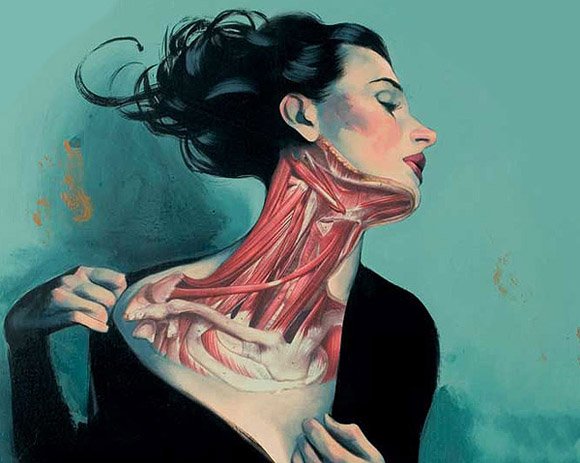
Think about something as ordinary as turning your head. That movement doesn’t happen because one muscle contracts. Multiple muscles coordinate with the joints of the neck, upper back, shoulders, and rib cage. Your posture, breathing, and even the position of your shoulder blades can influence how comfortably that movement happens. If your upper back is stiff and doesn’t rotate well, your neck may have to contribute more movement. If your shoulders spend hours pulled forward over a computer, muscles around the neck and upper back may have to work differently to support that position. Eventually, you might experience neck pain. That doesn’t mean we ignore your neck. It means your neck may not be the only place worth looking.
Compensation is useful, until it isn’t. Your body is remarkably good at finding another way to accomplish a task. If something is tight, weak, irritated, injured, or simply not moving efficiently, other areas can temporarily pick up the slack. That ability is useful. It allows us to keep moving through daily life. The problem is that temporary compensation can become a habitual movement pattern. A restriction around the hip, for example, can change how you walk or stand. That may influence the muscles around the pelvis and low back. By the time something starts hurting, several areas may be participating in the pattern.
Pain is information, not a map. Where you hurt matters. But pain doesn’t always provide a perfect set of directions to its cause. That’s one reason individualized treatment matters to me. Two people can walk into my treatment room with the exact same complaint, “my right shoulder hurts,” and need completely different sessions. Their jobs may be different. Their injuries may be different. Their movement patterns may be different. One may have been dealing with the problem for three days and the other for three years. So rather than beginning every appointment with a predetermined routine, I start with the person who is actually on the table that day. Because sometimes the place asking for your attention isn’t the place where the conversation started.